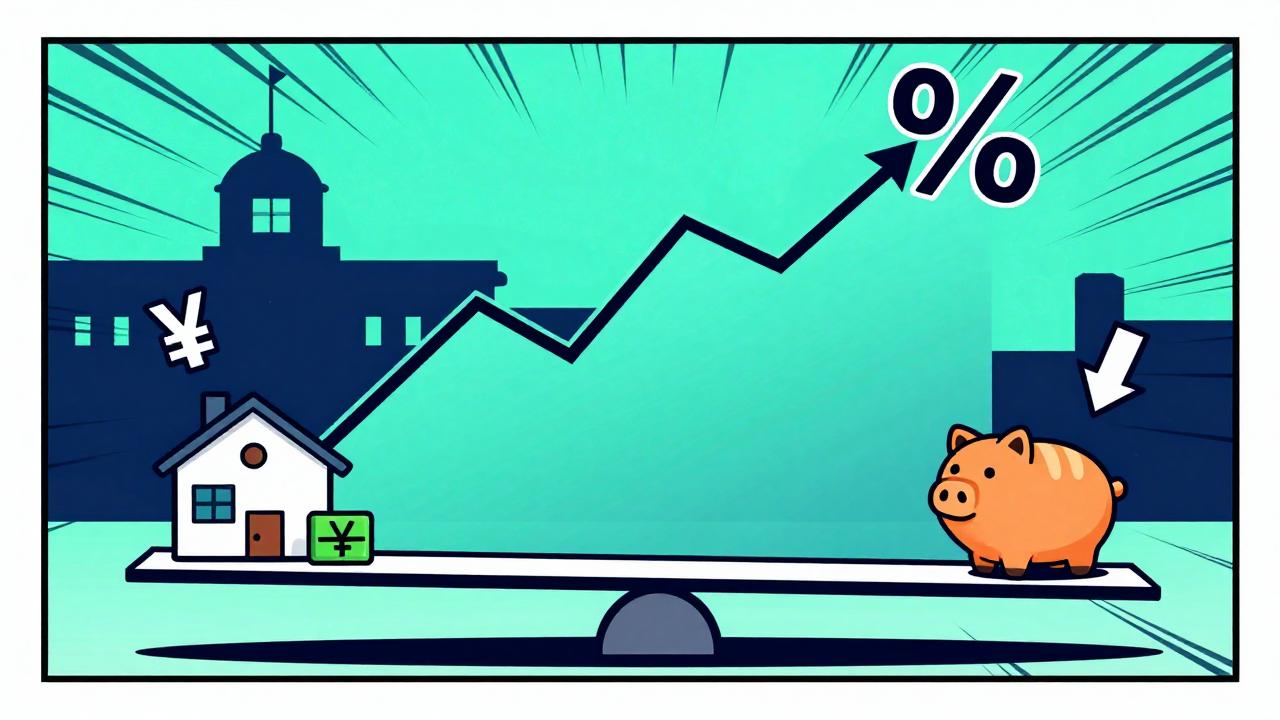
It makes me laugh when people act surprised that interest rates have risen in Japan recently, but it wasn’t that long ago that a real estate agent trying sell me on using a loan to buy property said “Rates rising in Japan? That is unfathomable! It could never happen!”
That guy was probably in his mid-twenties, and had only been in the workforce for around 5 years. To him, interest rates had been near zero for his entire working life, and he couldn’t imagine things being any different
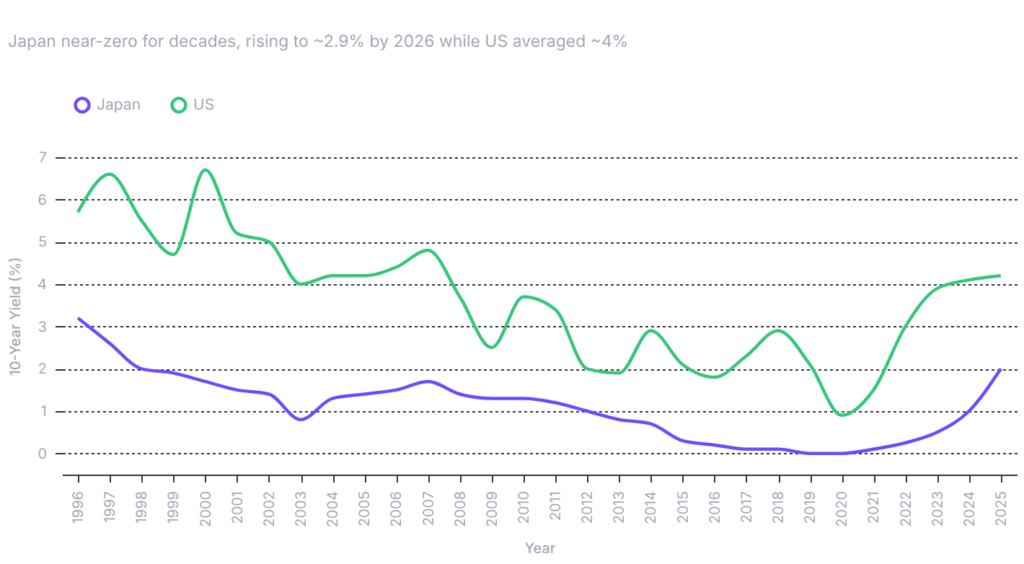
The reality is though, that interest rates of course change over time. They are the “Variable” in terms like “Variable interest rate loan”. They have been high before, and so of course they would be high again.
In fact, the central banks and the government have only a few levers they can pull to move the economy in the direction they want. They can print money, buy money, raise or lower taxes, hand out stimulus checks, increase or decrease public spending, or … raise or lower interest rates.
The fact that interest rates had been so low for so long wasn’t a sign that Japan was somehow special, so much as it was an unusual state that has now been corrected.
Central banks usually lower interest rates in order to encourage spending and speed up the economy. When things speed up too much and it looks like the economy is heading into a bubble (which would eventually lead to a crash), the government will raise interest rates to slow things down. When growth is slower than they would like, they will lower interest rates so that it’s easy to borrow money. This encourages people and businesses to spend and causes the economy to heat up again.
Only, in Japan, even a zero percent interest rate didn’t heat things up as much as the government would have liked – so it stayed around zero for a long time. To put it another way, GDP growth, wage growth, and inflation stayed around zero, and so the central bank kept the interest rates around zero too.
So what changed?
1. Inflation went from very low to quite noticeable in a short period of time. Some of this was due to rising energy prices as a result of wars overseas. Some of it was due to the weakening of the yen. There are multiple causes, but the important thing is that it exceeded the target that the Bank of Japan had in mind.
2. The exchange rate started to shift rapidly. This was caused in large part by increasing interest rates in the United States and other countries. Many countries had lowered interest rates during COVID, and started to increase rates again recently. Once the spread between interest rates you could earn on Yen and Dollar became large enough, investors were willing to take the currency exchange risk to invest in USD and earn a higher interest rate. When this happens on a large enough scale, the net effect is to lower the value of the Yen relative to the Dollar.
In order to slow down the selling of Yen to buy dollars, the Central Bank had to make interest rates more attractive in Japan.
The moves made by the bank of Japan so far have actually been quite timid. One reason for this is that there are benefits to having a cheap currency, too. For example, there are still large exporters in Japan, and they typically benefit from the cheap yen. Another reason is that not only will increased interest rates slow down an already slow economy, but they will also cause hardship to those with large loans (such as mortgages). To be fair, though, anyone who buys a house with a variable rate loan should be prepared for such a thing! Finally, making small, incremental changes allows the Bank of Japan to gauge the effects before proceeding.
The point here isn’t to explain every detail of how these complex interactions work, or get deep into economic theory. I just want you to understand a few simple points:
- Interest rates go up and down. It’s normal. Nobody should be surprised.
- Currency exchange rates also go up and down. Nobody should be surprised.
3. Inflation goes up and down. Nobody should be surprised.
Hyperbole like “It’s the Highest rate in X years!!!” is silly, and misses the point. It will always be the highest, or lowest in X years – you just have to change X to match the current situation. What’s more, any high or low marks will be broken eventually.
Then there are two more important points:
4. High (low) interest rates aren’t inherently good or bad. They are good (bad) for different parties.
5. High (low) exchange rates aren’t inherently good or bad. They are good (bad) for different parties.
From a personal perspective:
– If you have lots of credit card debt and you want to go on a vacation overseas, then you want a strong yen and low interest.
– If you have lots of cash in the bank and you sell things to tourists, you want a weak yen and high interest.
Leave a Reply